
Justinian's 537 masterpiece, with a dome that seems to float.
Tour Overview
Your Istanbul Travel Agency for Historical & Cultural Turkey


Our signature 3-day Istanbul cultural itinerary visits five places every full day: Hagia Sophia, the Blue Mosque, the Hippodrome, the Basilica Cistern, the Grand Bazaar, Topkapı Palace, the Süleymaniye Mosque, the Spice Bazaar, Galata Tower, a Bosphorus cruise, Dolmabahçe Palace, Ortaköy, Chora Church, Pierre Loti Hill and the Asian shore at Kadıköy. Each stop includes the history, the story and the practical tips that turn a photograph into a memory.
Whether you are a family travelling with children, a couple seeking romance, or a group of friends who love Byzantine and Ottoman history, we adapt the pace. You can add airport transfers, hotel booking assistance and onward Turkey package tours to Cappadocia, Ephesus, Pamukkale and Antalya, all supported by one team and one WhatsApp conversation. See more, understand more, and travel comfortably.
Rated 5.0 from 33 reviews on Tripadvisor, our guests regularly describe the same things: honest advice, flexible plans and guides who treat them like guests in their own home. That is the standard we promise for your Istanbul tour package.
This tour is perfect for
History lovers Families with children Couples Photographers Friends & groups First-time visitors Mature travellers
Topic Highlights
What Makes This Istanbul Tour Special
Byzantine & Ottoman Heritage
Walk from Constantinople's Hippodrome to the sultans' Topkapı Palace within one compact historic district.
Basilica Cistern
Wander among 336 ancient columns in an atmospheric Byzantine underground reservoir.
Grand & Spice Bazaars
Experience two legendary markets, with a guide who knows quality, fair prices and tasting stops.
Bosphorus Cruise
See palaces, fortresses and bridges from the strait that joins Europe and Asia.
Two Continents, One Day
Cross by public ferry to Kadıköy for a local-life contrast to the monuments.
Early-Access Timing
Your guide sequences stops to reach the big monuments before the crowds.
Private or Small Group
Your pace, your interests: families, couples and friends are all welcome.
Door-to-Door Comfort
Airport transfers, air-conditioned transport and hotel arrangements on request.
Extend Across Turkey
Add Cappadocia, Ephesus, Pamukkale or Antalya in one connected itinerary.
Recommended 3-Day Premium Istanbul Cultural Itinerary: Article & Guide
If you have three days in Istanbul, the order of your Istanbul itinerary matters more than the number of sights. The old city is built on hills, and its great monuments belong to different centuries. A well-planned 3-day Istanbul tour therefore follows history in sequence: first Byzantine Constantinople, then the Ottoman court, and finally the 19th-century waterfront and modern neighbourhoods. This is how our Recommended 3-Day Premium Istanbul Cultural Itinerary is built.
Day 1 stays inside Sultanahmet, the historic peninsula. You start at the Hippodrome, enter the Blue Mosque and Hagia Sophia before the day's crowds, go underground at the Basilica Cistern, and finish in the Grand Bazaar. Everything is walkable, so there is little time lost in traffic.
Day 2 is the Ottoman day: Topkapı Palace, the Süleymaniye Mosque, the Spice Bazaar, Galata Tower and a late-afternoon Bosphorus cruise. Day 3 reaches beyond the monuments with Dolmabahçe Palace, Ortaköy, the Byzantine mosaics of Chora Church, Pierre Loti Hill and a ferry to Kadıköy on the Asian side.
This Istanbul private tour is flexible: swap the Chora Church for the Princes' Islands, add a Turkish cooking class, or extend to Cappadocia with a sunrise balloon flight. Because we are a local Istanbul tour company, changes can be arranged quickly, even during the trip.
Day-by-Day Itinerary: Five Places Each Day
Three days, fifteen places, two continents. Tap a day to see every stop and what it offers.
1
Begin where Constantinople began. Sultanahmet packs two empires into a few hundred metres, so your guide starts early, before the large groups, and walks you through five landmarks in a logical story from chariot races to sultans' bazaars.
1. Roman Hippodrome (Sultanahmet Square)
The great chariot-racing arena of Constantinople once held tens of thousands of spectators. Three monuments still mark the old track: the 3,500-year-old Egyptian Obelisk of Theodosius, the bronze Serpent Column brought from Delphi, and the German Fountain. Stand here and you are on the political stage of the Byzantine Empire.
Few visitors realise that the pavement under their feet is the original ground level of Constantinople's racing arena. Emperors watched from a palace box linked directly to the track, and the rival chariot teams, the Blues and the Greens, split the city into passionate political factions.
Local tip: Photograph the Obelisk early; the low morning sun lights the carved hieroglyphs.
2. Blue Mosque (Sultan Ahmed Mosque)
Built between 1609 and 1616, it is famous for its cascade of domes, six slender minarets and more than twenty thousand blue İznik tiles. It is still a working mosque, so visits are timed around prayer and modest dress is required. The courtyard alone is one of the best architectural photographs in Turkey.
Look up inside the central dome: the blue-and-white İznik tiles, painted tulips and carnations, and 260 windows create a feeling of floating light. The mosque was a bold statement by a young sultan who dared to build six minarets, which briefly caused a scandal in Mecca.
Local tip: Visit between prayer times, carry a scarf, and remove shoes at the entrance.
3. Hagia Sophia
Completed in 537 under Emperor Justinian, its immense dome changed the history of architecture. Church, mosque, museum, mosque again: every era left its mark, from golden mosaics to Ottoman calligraphy medallions. Your guide explains how to read the building layer by layer.
The pendentive construction of its dome, a technical breakthrough in 537, influenced church and mosque design for a thousand years. Look for the Viking runes carved on an upper gallery balustrade and the shimmering gold mosaics of the Virgin and Child.
Local tip: Entry and dress arrangements change from time to time, so your guide confirms the current rules and timing in advance.
4. Basilica Cistern
Descend into a Byzantine underground reservoir built in the sixth century, where 336 columns rise from still water in soft amber light. Two Medusa-head column bases add mystery. It is cool and quiet, a welcome pause in the middle of a busy day.
Called the Sunken Palace by locals, the cistern stored water for the Great Palace and later for Topkapı. Its 336 marble columns were recycled from older Roman buildings, which is why no two capitals match.
Local tip: Wear non-slip shoes and bring a light layer; it stays cool and damp all year.
5. Grand Bazaar
Begun in the 15th century, this covered market grew into a maze of more than sixty streets and thousands of shops. Your guide helps you recognise good ceramics, leather, jewellery and textiles, and shows the old han courtyards where caravan merchants once traded.
Each street was historically assigned to a trade, and some of those traditions survive in the goldsmiths' lanes and carpet courtyards. The old Bedesten at the centre was the strongest, most secure part of the market, where the most precious goods were kept.
Local tip: Browse first, compare prices, and accept the tea offered; you are never obliged to buy.
Evening free for a Turkish dinner in Sultanahmet or an optional meyhane night with live music.
Licensed local guide Private or small-group Hotel transfers
2
Today follows the sultans: from the palace where they ruled, to the mosque that crowned their skyline, the market that fed their capital and the strait that carried their ships.
1. Topkapı Palace
For nearly four centuries the Ottoman court lived and governed from this hilltop complex above the Bosphorus. Four courtyards lead to the Imperial Council, the Treasury with its famous jewels, and the terraces overlooking two continents. A guide turns rooms into stories of intrigue, ceremony and power.
The Harem section, with its hundreds of rooms, shows how the sultan's family, advisers and court lived. The Treasury holds the famous Spoonmaker's Diamond and the jewelled Topkapı Dagger, and the Holy Relics section is among the most visited rooms in the palace.
Local tip: Allow at least three hours. Booking a guide saves queuing and links the rooms into one story.
2. Süleymaniye Mosque
Mimar Sinan's masterpiece, completed in 1557, commands the highest of Istanbul's seven hills. The calm interior shows his genius for light and proportion, and the terrace gives a sweeping view of the Golden Horn. Many visitors call it the most peaceful place in the city.
Sinan designed the complex as a whole city of charity: a school, a hospital, a kitchen for the poor and a bathhouse. Süleyman the Magnificent and his wife Hürrem Sultan rest in tombs in the garden behind the mosque.
Local tip: The terrace café below the mosque is a lovely place for tea with a Golden Horn view.
3. Spice Bazaar (Egyptian Bazaar)
Since the 1660s, merchants here have sold saffron, sumac, dried fruits, teas and Turkish delight under a vaulted L-shaped hall. Taste before you buy, and let your guide point out which stalls the locals trust.
The hall was once financed by taxes on Egyptian goods, which is why Turks call it the Egyptian Bazaar. Look for lokum, pistachio baklava, cured meats, saffron, dried mint and the fragrant blends of Turkish tea.
Local tip: Buy spices in sealed packs for easy travel, and ask for samples of lokum before choosing.
4. Galata Tower & Karaköy
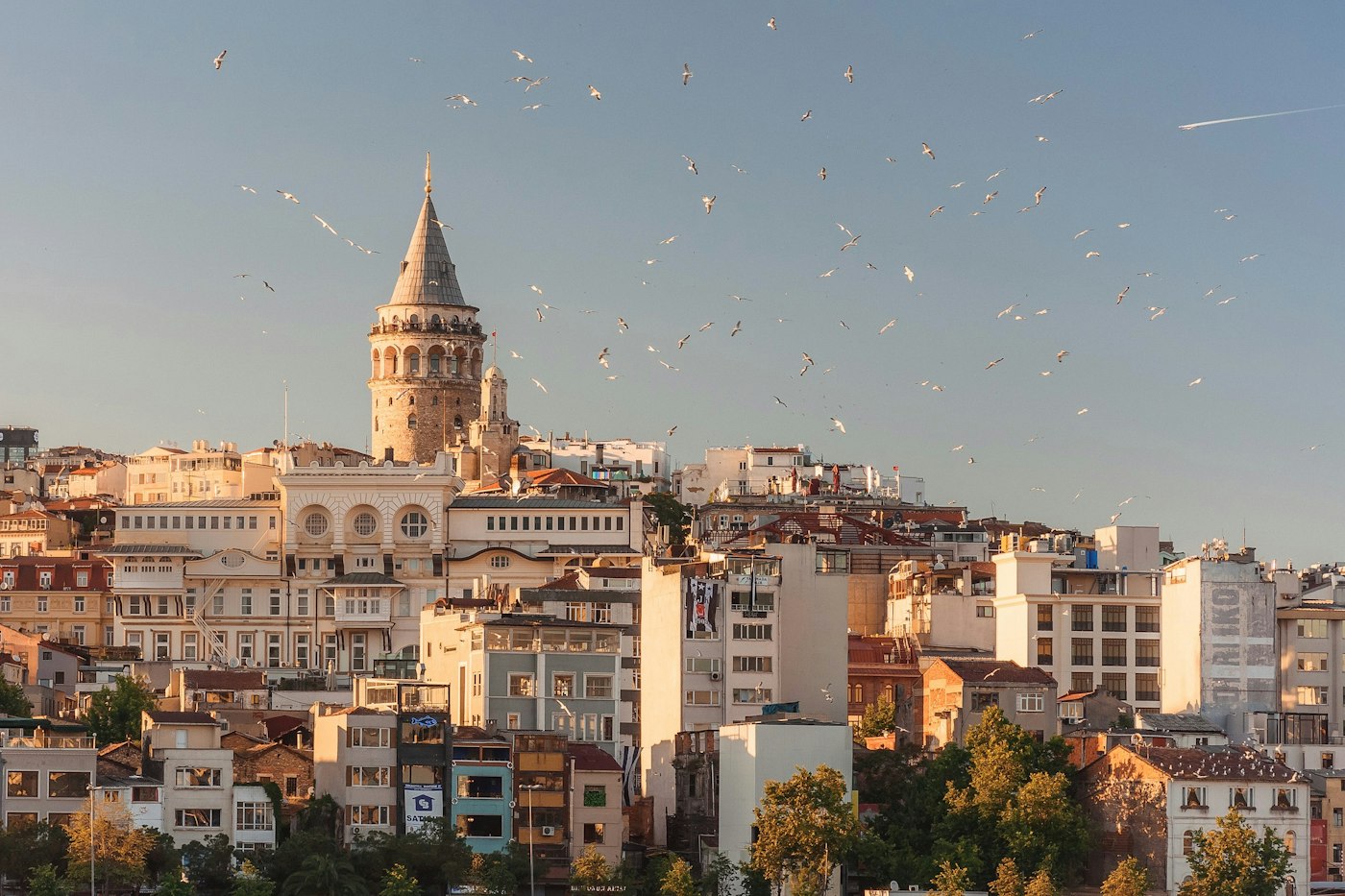
Raised by the Genoese in 1348, the tower rewards the climb with a full 360-degree panorama of the Old City skyline. Beneath it, Karaköy's streets of cafés, galleries and ironwork stairways show the creative side of modern Istanbul.
The tower marked the boundary of the Genoese colony of Galata, which operated as a separate trading town facing the Byzantine capital across the Golden Horn. The climb up the Galata Bridge side streets is steep, so a taxi or the historic funicular helps.
Local tip: Go an hour before sunset for the city's most colourful light.
5. Bosphorus Cruise
Glide between Europe and Asia past Ottoman waterfront palaces, wooden yalı mansions, medieval fortresses and graceful bridges. Late afternoon light turns the shoreline gold, which is why we schedule the cruise last.
Look for the white marble Dolmabahçe Palace, the wooden mansions of Arnavutköy, and the medieval Rumeli Fortress built in only four months in 1452. Seagulls follow the boat, and the simit seller on board is optional entertainment.
Local tip: A sunset cruise gives the best colours; bring a light jacket for the breeze.
Dinner at a local fish restaurant by the water is our favourite way to end the day.
Palace entrance as stated in quotation Bosphorus cruise Guide & transport
3
The final day widens the picture: grand 19th-century palace life, Byzantine mosaics, Golden Horn viewpoints and an easy crossing to Asia. It leaves you with the feel of living Istanbul, not only monuments.
1. Dolmabahçe Palace
Built between 1843 and 1856, this European-style waterfront palace replaced Topkapı as the sultans' home. Crystal chandeliers, a huge ceremonial hall and views across the water show the empire's last splendour. It is also where Atatürk spent his final days.
The Ceremonial Hall holds one of the world's largest chandeliers, a gift from Queen Victoria weighing several tonnes. Rooms are decorated with Bohemian crystal, Hereke silk carpets and French furniture.
Local tip: Photography indoors is restricted, so enjoy the rooms with your guide instead.
2. Ortaköy & Bosphorus Waterfront
Stroll the pier beside the baroque-style Ortaköy Mosque, with the Bosphorus Bridge rising behind it. Try the famous stuffed baked potato (kumpir) and watch the ferries pass.
Ortaköy was once home to Muslim, Jewish, Greek and Armenian communities side by side, and the neighbourhood still shows that mix with a mosque, a synagogue and churches within a few streets.
Local tip: Try kumpir, the loaded baked potato, and stroll the craft stalls on the square.
3. Chora (Kariye) Church
Its 14th-century mosaics and frescoes, among the finest in the Byzantine world, tell the lives of Christ and the Virgin with startling detail. Opening arrangements and dress rules have changed in recent years, so your guide confirms access before the visit.
The mosaics were created around 1315 under the patronage of the statesman Theodore Metochites. Scenes of the Virgin's life and the Resurrection appear in tiny gold tesserae with vivid, almost cinematic movement.
Local tip: Opening times can change, so your guide confirms access ahead of the day.
4. Pierre Loti Hill & Golden Horn
Ride the cable car up from Eyüp to a hilltop café with a classic view over the Golden Horn. Eyüp itself is a deeply spiritual district for local families and gives a gentler, more traditional side of the city.
The hill is named after a French novelist who loved Istanbul and wrote about the Golden Horn. The cable car climbs from Eyüp Sultan Mosque, a place of pilgrimage, to cafés with a wide, calm view.
Local tip: Late afternoon is the best time for photographs and a glass of Turkish tea.
5. Kadıköy on the Asian Shore
Cross the Bosphorus by public ferry, one of the great commuter rides in the world. Kadıköy's market, seafood lanes and cafés let you taste an everyday Istanbul away from the tourist trail.
The ferry crossing takes about twenty minutes and offers one of the best skyline views in Istanbul. Kadıköy's market sells fresh fish, olives, cheeses and pickles, while the nearby Moda neighbourhood has quiet seafront walks.
Local tip: Buy an Istanbulkart or let your guide handle tickets for the ferry.
Your guide helps with onward plans: Cappadocia flights, Ephesus, Pamukkale or Antalya extensions.
Ferry experience Guide & transport Airport transfer on request
Destination Guides
Six Icons, Fifteen Places, One Istanbul Journey
A closer look at the landmarks that define the tour.
Six minarets and twenty thousand blue tiles.
The sultans' hilltop court above the Bosphorus.
A 15th-century covered city of shops and hans.
Saffron, sumac, tea and Turkish delight.
The strait that joins two continents.
Day 1 · Sultanahmet
Hagia Sophia: 1,500 Years Under One Dome
Few buildings on earth carry as much history as Hagia Sophia. Emperor Justinian ordered it built in just five years, and when it opened in 537 its dome seemed to hang from heaven on a ring of windows. For almost a thousand years it was the largest cathedral in the world, the setting for imperial coronations and the heart of Orthodox Christianity.
In 1453 Sultan Mehmed II entered the city and turned it into a mosque. Minarets, a mihrab and giant calligraphy medallions were added, yet the Byzantine mosaics survived beneath the plaster. Today the building is a rare place where Christian and Islamic art share a single space.
Your guide leads you through the nave, galleries and entrance halls, pointing out the details most visitors miss, from the Viking graffiti to the weeping column and the Imperial Door.
Dome built in 537 by Isidore and Anthemius
Byzantine mosaics and Ottoman calligraphy
Upper gallery and Imperial Door
Best photographed in early morning light

537 ADByzantine · Ottoman
Built
537 AD
Day
1
Must-see
Main dome
Best for
History lovers
Insider tip: Visit first thing in the morning and pair it with the Basilica Cistern, just 150 metres away.
Day 1 · Sultanahmet
The Blue Mosque: Six Minarets and Twenty Thousand Tiles
Facing Hagia Sophia across a leafy park, the Sultan Ahmed Mosque was built between 1609 and 1616 to show that Ottoman architecture could rival Byzantine glory. Its exterior rises in a cascade of semi-domes, and its six minarets give the skyline its unmistakable silhouette.
Inside, more than twenty thousand hand-painted İznik tiles in blue, turquoise and red cover the walls, and stained-glass windows flood the carpets with colour. The mosque is still used daily for prayer, so every visit is a living lesson in how the Ottomans designed space, light and quiet.
Your guide explains the courtyard, ablution fountain and prayer hall, and how to visit respectfully, including dress, shoes and the best moments to enter.
Cascade of domes and half-domes
Six minarets, a rare feature
Hand-painted İznik tiles
Open courtyard for photographs

1616Sultan Ahmed I
Built
1609–1616
Day
1
Must-see
Tiled interior
Best for
Families & couples
Insider tip: Women should carry a scarf and everyone should wear clothing that covers shoulders and knees.
Day 2 · Sarayburnu
Topkapı Palace: The Sultans' Hilltop World
From the 1460s until the mid-19th century, Topkapı Palace was the nerve centre of the Ottoman Empire. Perched above the meeting of the Bosphorus, Golden Horn and Sea of Marmara, it contains four main courtyards, each more private than the last, from public ceremony to the sultan's most intimate spaces.
The Imperial Treasury glitters with diamonds and emeralds, the Harem reveals the daily life of the sultan's household, and the Holy Relics section is a place of pilgrimage. The kitchens still hold huge collections of Chinese porcelain.
Our guide connects each pavilion to a story of power, romance or intrigue, so the palace becomes a drama rather than a list of rooms.
Four courtyards and the Gate of Salutation
Imperial Treasury and famous jewels
Harem apartments (separate ticket)
Terraces with Bosphorus views

1460sOttoman court
Built
From 1460s
Day
2
Must-see
Treasury
Best for
History & photography
Insider tip: Arrive at opening time; Topkapı is closed one day a week, so check the day before you plan it.
Day 1 · Beyazıt
The Grand Bazaar: A City Beneath a Roof
Begun under Mehmed the Conqueror in 1461, the Grand Bazaar is one of the largest covered markets in the world, with more than sixty streets and several thousand shops. It was the commercial heart of the Ottoman capital, where caravans from Persia, Venice and India met.
Today the lanes hold gold, silver, ceramics, lanterns, leather, carpets and textiles, with tea sellers and craftsmen at every corner. Behind the main alleys, quiet inner courtyards called hans preserve the original merchant atmosphere.
Your guide helps you read quality, understand fair prices and discover workshops where you can watch objects being made.
More than 60 streets under domed roofs
Jewellery, ceramics, leather and textiles
Hidden hans and courtyards
Guide-assisted shopping with no pressure

1461Since the 15th century
Built
1461
Day
1
Must-see
Old Bedesten
Best for
Shoppers
Insider tip: The bazaar is closed on Sundays and public holidays, so day order matters.
Day 2 · Eminönü
The Spice Bazaar: A Feast for the Senses
Completed in the 1660s beside the Yeni Mosque, the Spice Bazaar is an L-shaped hall of colour and fragrance. For centuries it was the centre of the spice trade, which brought pepper, cinnamon and saffron into the Ottoman capital.
Today you can taste Turkish delight, nuts, dried apricots and figs, and learn how Turks blend tea and spices. Outside, the streets around Eminönü are full of coffee roasters, cheese shops and food stalls.
Your guide points out the stalls locals trust, so you can shop for gifts and edible souvenirs with confidence.
Saffron, sumac and Turkish tea
Lokum, baklava and nuts
Historic L-shaped hall
Neighbouring street-food lanes

1660sEgyptian Bazaar
Built
1660s
Day
2
Must-see
Lokum stalls
Best for
Food lovers
Insider tip: Ask for a taste before buying, and compare packaging for weight limits when flying.
Day 2 · Bosphorus
The Bosphorus: Where Europe Meets Asia
The Bosphorus is only about thirty kilometres long, yet it connects the Black Sea and the Sea of Marmara and divides two continents. For centuries it carried grain ships, warships and sultans' caiques, and its banks are lined with palaces, wooden mansions and fortresses.
A cruise reveals Dolmabahçe Palace, the Ortaköy Mosque, Rumeli Hisarı and Beylerbeyi Palace, and shows how the city faces both Europe and Asia at once.
We schedule the cruise late in the day, so the golden hour lights the shoreline and the city lights begin to appear.
Palaces, yalı mansions and fortresses
Two continents in one sailing
Sunset light for photographs
Optional dinner by the water

30 kmEurope · Asia
Length
~30 km
Day
2
Must-see
Ortaköy view
Best for
Everyone
Insider tip: Sit on the open upper deck on the right side as you head north for the best palace views.
Services
What Is Included and Not Included
Included (as listed in your quotation)
- Licensed local guide for all three days
- Private or small-group arrangement
- Air-conditioned transport between stops
- Airport and hotel transfers when requested
- Bosphorus cruise
- Hotel booking assistance
- Direct WhatsApp support
Not included
- International flights
- Travel insurance
- Meals not stated in the quotation
- Entrance fees unless stated
- Personal shopping and optional extras
Pricing
Istanbul Tour Price: Customised Quote
Prices depend on dates, group size, hotel category and the services you choose, so we quote each trip in writing. As a market guide, private guided Istanbul day tours are commonly listed on Tripadvisor at roughly $85–$130 per adult, and private multi-day Istanbul programs from about $90 per adult depending on group size. Packages that add hotels and domestic flights cost more. This range is indicative only, and your quotation is final.
AI-Powered Travel Recommendations
Smart Tips for Your Istanbul Tour
Practical suggestions to improve your itinerary.
Start early
Reach Hagia Sophia and Topkapı near opening time; shift bazaars to later in the day.
Pace your legs
Istanbul is hilly and cobbled. Wear comfortable shoes and < each day to five stops.
Plan around prayer
Mosques pause visits during prayer times. Your guide sequences stops to avoid waiting.
Best seasons
April–May and September–November bring mild weather and soft light.
Dress respectfully
Shoulders and knees covered for mosques; scarves are easy to carry for women.
Extend smartly
After three days, fly to Cappadocia for balloons and fairy chimneys.
Guest Reviews
5 Stars Excellent Service: The History Travel Agency
5.0
★★★★★
33 reviews on TripAdvisor
Guest reviews from our TripAdvisor listing, shortened. Read all reviews on TripAdvisor.
B
★★★★★
A family trip with a detailed itinerary; domestic bookings, transfers and guides were all organised, with updates throughout.
H
★★★★★
Bought a 7-day Cappadocia package and praised the “absolutely amazing service” from the owner and staff.
S
★★★★★
Booked a 10-day family package and found the owner friendly, knowledgeable and well organised.
C
★★★★★
Full-day Istanbul tour covering the main mosques and Topkapı; guides felt like hosts and the price was fair.
N
★★★★★
A personalised itinerary, knowledgeable English-speaking guides, and good transport and hotels.
I
★★★★★
Their customised Istanbul plan made sense from first attraction to last, and was quickly adjusted when a relative felt unwell.
D
★★★★★
Praised a vegetarian lunch arranged in advance and a calm, exceptional guide on the city tour.
S
★★★★★
A trip customised to his requests, with warm hospitality throughout.
D
★★★★★
Organised a Cappadocia tour, stayed in touch on WhatsApp and refunded a balloon flight cancelled by weather.
Reservations
Book Your 1-Night, 1-Day Amasya Tour
TOUR CODE: KNY-558
€0
per adult, group tour
- Round-trip overnight coach, Istanbul–Amasya–Istanbul
- Professional local guide
- Full Amasya sightseeing program
- Local transportation during sightseeing
- Secure payment options
- Free cancellation (48 hrs prior)
Prefer to talk? Call or WhatsApp:
0090 536 560 10 38
0090 536 560 10 38
Have questions, or not ready to reserve yet? Send us a message and we'll reply within a few hours.
Choose private or group, select your tickets, and provide your details. We'll confirm availability within a few hours.
Cancellation Policy
Free cancellation up to 48 hours before the tour date. Cancellations within 48 hours are non-refundable. Date changes are accommodated subject to availability.
Payment Options
Visa
Mastercard
Bank Transfer
PayPal
FAQ
Istanbul Travel Agency: Frequently Asked Questions
Inquiry