
From Byzantine Istanbul and the battlefields of Gallipoli to a private Gulet Blue Cruise, Cappadocia's sunrise balloons, and 11,500-year-old Göbeklitepe — the most complete historical, cultural and adventure journey across Turkey that The History Travel offers.

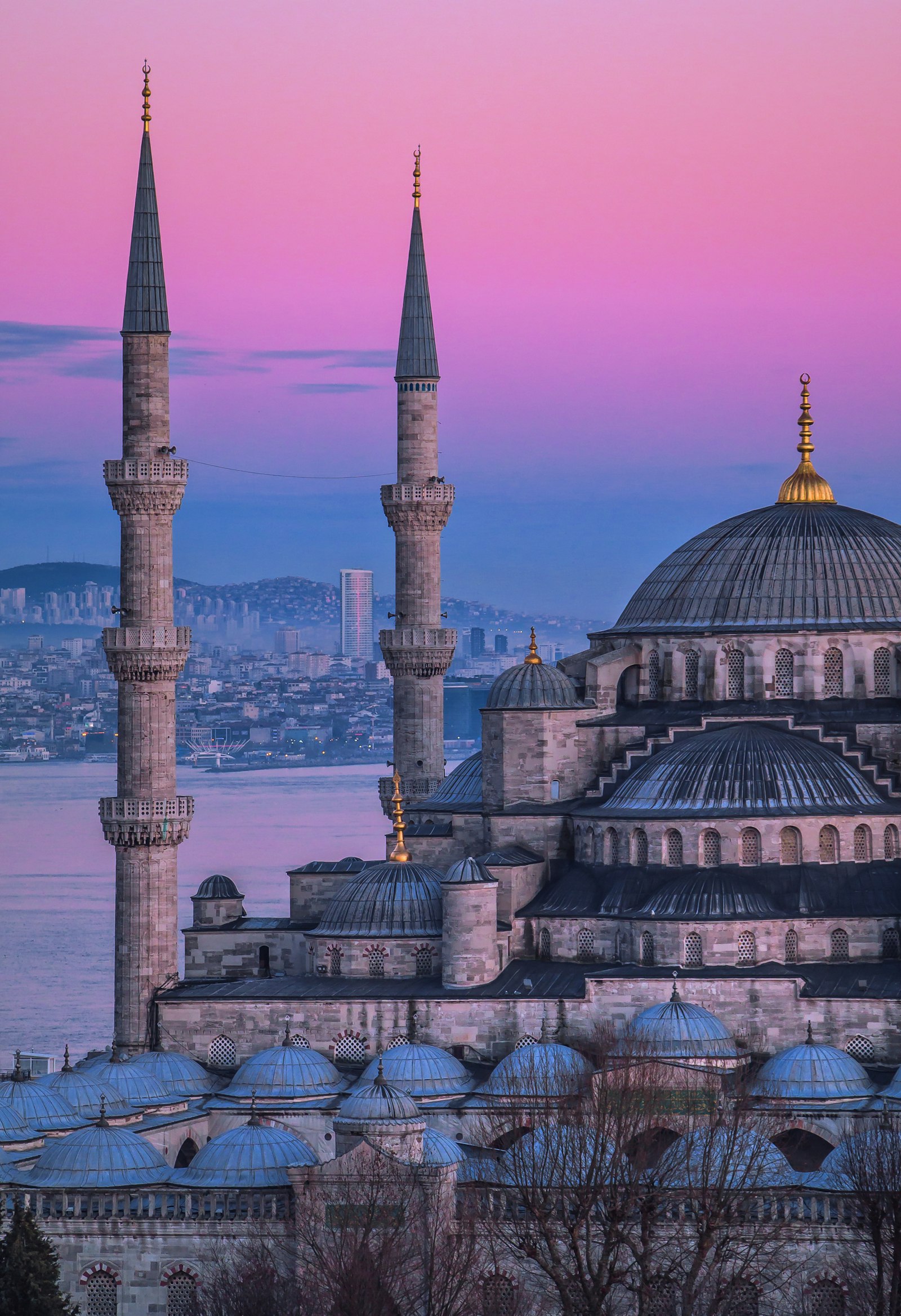


The Grand Odyssey of Anatolia is The History Travel's flagship itinerary — a single, seamlessly connected journey through virtually every era and landscape that makes Turkey one of the richest travel destinations on Earth. It opens among the domes and minarets of Byzantine and Ottoman Istanbul, crosses the Dardanelles to the WWI battlefields of Gallipoli and the legendary ruins of Troy, and moves south through the Greco-Roman splendour of Pergamon, Ephesus and Aphrodisias.
From there the pace shifts: the white travertine terraces of Pamukkale give way to guided day-hikes along the world-famous Lycian Way, before you board a private, crewed wooden Gulet for seven unhurried nights sailing the Turquoise Coast — anchoring in secluded bays, snorkelling over sunken Lycian ruins, and dining on fresh-caught seafood under the stars. The final third of the trip trades sea for mountain and cave: Roman theatres and a high-altitude trek at Termessos, sunrise hot-air balloons over Cappadocia's fairy chimneys, the colossal stone heads of Mount Nemrut, and Göbeklitepe — the oldest known monumental temple architecture on the planet, predating Stonehenge by six thousand years.
Every day is led by a full-time, TURSAB-licensed senior historian guide, travelling with you in a private, chauffeur-driven Mercedes VIP vehicle, so context and expertise are constant companions rather than a rotating cast of local guides. Available as a fully private, custom-paced departure or as a small-group tour capped at just ten guests, this is Turkey experienced in genuine depth — not skimmed across a fortnight, but properly explored.
Five full days across Hagia Sophia, Topkapı Palace, Dolmabahçe and the Grand Bazaar, plus a private Bosphorus sunset cruise.
Guided coastal hikes past Kayaköy's ghost village, Butterfly Valley, Saklıkent Gorge and Tlos's rock tombs.
A crewed wooden yacht through Göcek, Kalkan, Kekova and Kaş — the Turquoise Coast at its most authentic.
Sunrise balloon flights, Byzantine cave churches, an 8-level underground city and a genuine cave-hotel stay.
Colossal 9-metre stone god-heads on a mountaintop sanctuary built by King Antiochus I of Commagene.
The 11,500-year-old temple complex that rewrote the story of human civilisation — with a private expert lecture on site.
The itinerary is organised into five natural phases — each a distinct chapter of the journey, from imperial capitals to open sea to mountain sunrise. Tap any day to expand its full description, or use "Expand All" to read straight through.
Byzantine and Ottoman Istanbul, the WWI battlefields of Gallipoli, legendary Troy, and the Greco-Roman splendour of Pergamon, Ephesus and Aphrodisias.
Your journey begins the moment you land at Istanbul Airport, where a private, chauffeur-driven Mercedes VIP vehicle is waiting to whisk you across the city to your hotel in Sultanahmet — the ancient acropolis that has served as the ceremonial core of Byzantine Constantinople and Ottoman Istanbul alike. After checking in, your master historian tour leader hosts a welcome briefing, mapping out the extraordinary forty days ahead and answering every question about pacing, packing and what to expect.
As the sun drops toward the Sea of Marmara, take an easy orientation stroll through the Hippodrome, once the chariot-racing arena of the Byzantine emperors and now an open-air plaza scattered with obelisks brought from Egypt and Constantinople's own bronze foundries. The evening closes with a welcome dinner of Ottoman palace cuisine — the layered, slow-cooked dishes once served to sultans in the kitchens of Topkapı — setting the tone for a trip built on history you can taste as well as see.
Few buildings on Earth carry the layered weight of history quite like Hagia Sophia. Commissioned by Emperor Justinian I in AD 537, its vast dome — an engineering feat unmatched for nearly a thousand years — has watched the building serve in turn as the world's largest cathedral, an imperial mosque under Sultan Mehmed II, a secular museum, and today once again a working mosque. Your guide walks you beneath the golden mosaics and marble revetments, explaining how each era left its own fingerprint on the walls.
From there, descend into the cool, cavernous half-light of the Basilica Cistern, a sixth-century underground reservoir supported by 336 columns — several salvaged from older pagan temples, including two famous Medusa-head bases whose origins still puzzle archaeologists. The day closes at the Sultan Ahmed Mosque, better known as the Blue Mosque for the more than 20,000 handmade İznik tiles that wash its interior in shifting shades of turquoise and cobalt.
Fast-track entry to all major monuments with your expert historian guide.
Topkapı Palace was the administrative and residential nerve centre of the Ottoman Empire for close to four hundred years, from Mehmed the Conqueror to Abdulmecid I. Its four courtyards unfold like chapters — public reception halls giving way to the tiled corridors of the Imperial Harem, where you can still sense the intrigue of court politics that shaped an empire spanning three continents. The Treasury's jewel-encrusted daggers and the 86-carat Spoonmaker's Diamond are reason enough for the visit; the panoramic views over the Golden Horn from the palace gardens are the bonus.
As afternoon light softens, board a private yacht for a sunset charter along the Bosphorus, the narrow strait dividing Europe from Asia. Sail past grand wooden Ottoman yalı mansions, the fortress of Rumeli Hisarı built by Mehmed the Conqueror in just four months before his 1453 siege of the city, and the Maiden's Tower — all with champagne and canapés in hand as Istanbul's skyline glows gold behind you.

Private Bosphorus yacht charter with champagne and canapés at sunset.
Get pleasantly lost inside the Grand Bazaar, one of the oldest and largest covered markets on the planet — a sixteenth-century labyrinth of some 4,000 shops selling hand-knotted carpets, gold jewellery, ceramics and leather beneath vaulted, frescoed ceilings. From there, a short walk brings you to the Egyptian (Spice) Bazaar, where mountains of saffron, sumac and Turkish delight perfume the air exactly as they have since Ottoman merchants first traded here in the 1660s.
In the afternoon, climb to the Süleymaniye Mosque, architect Mimar Sinan's sixteenth-century masterwork commissioned by Süleiman the Magnificent. Its hilltop terrace delivers one of the city's finest panoramas over the Golden Horn and the Bosphorus, while inside, restrained Ottoman classicism and coloured light through stained glass make it one of Istanbul's most serene interiors. A guided tasting trail rounds out the day with regional cheeses, artisan coffee and, of course, Turkish delight.

Guided culinary tasting trail featuring regional cheeses, Turkish delight and artisan coffee.
Dolmabahçe Palace marks the moment the Ottoman court turned toward Europe. Built in the 1850s along the Bosphorus shore, its Baroque and Neoclassical halls house the world's largest Bohemian crystal chandelier — a 4.5-tonne gift from Queen Victoria — and 14 tonnes of gold leaf across its ceilings. It was also here that Mustafa Kemal Atatürk, founder of the Turkish Republic, spent his final days in 1938; every clock in the palace is still stopped at 9:05, the hour of his death.
The afternoon shifts a thousand years earlier, to the Kariye Mosque (Chora Church), a Byzantine church whose fourteenth-century mosaics and frescoes depicting the life of Christ and the Virgin Mary are considered among the finest surviving examples of Byzantine art anywhere in the world — a quieter, more intimate counterpoint to Hagia Sophia's grandeur. The day ends with a restorative hammam treatment in a genuine 16th-century Ottoman bathhouse, following a ritual of steam, scrub and massage unchanged for five hundred years.

Evening hammam treatment at a restored 16th-century Ottoman bathhouse.
The road south from Istanbul crosses the Dardanelles into a landscape still marked by one of the twentieth century's most consequential campaigns. The 1915 Gallipoli campaign, an Allied attempt to knock the Ottoman Empire out of the First World War, ended in a costly stalemate and lasting national memory on every side — it was here that Mustafa Kemal (later Atatürk) first rose to prominence, and where Australian and New Zealand troops forged the ANZAC identity that still defines their national days of remembrance.
Walking through ANZAC Cove, Lone Pine Cemetery, Chunuk Bair and Johnston's Jolly with a knowledgeable guide transforms rows of headstones and quiet pine groves into a vivid, moving narrative of trench warfare, extraordinary courage and eventual reconciliation — Atatürk's own words of comfort to the mothers of fallen ANZAC soldiers are inscribed at the site and remain one of the most quoted reconciliation statements in modern history.
Troy needs no introduction — immortalised in Homer's Iliad as the city besieged for ten years over Helen, its walls have been excavated in nine distinct layers spanning roughly 3,600 years of continuous settlement, from early Bronze Age Troy I to Roman Ilium. Heinrich Schliemann's controversial nineteenth-century excavations first proved a real city underlay the myth, and ongoing work continues to refine the picture. Walking the site with a guide who can separate legend from stratigraphy is the difference between seeing rubble and seeing 3,600 years of human history.
A full-scale replica of the Trojan Horse stands near the entrance for the obligatory photograph, while the award-winning Troy Museum — a striking rust-coloured cube opened in 2018 — houses gold jewellery, weapons and pottery recovered from the site, alongside exhibits that place Troy within the wider network of Bronze Age Aegean and Anatolian trade.
Pergamon was a Hellenistic superpower in its own right, ruling much of western Anatolia and building a library second only to Alexandria's — its scholars are even credited with helping develop parchment (the word itself derives from 'Pergamena') after Egypt restricted papyrus exports to slow their rival's growth. A cable car lifts you to the acropolis, where the theatre's dizzying 36-degree slope makes it one of the steepest in the ancient world, built that way to squeeze a 10,000-seat auditorium onto a narrow hillside terrace.
Down in the valley, the Asclepion was one of the ancient world's premier healing centres, dedicated to Asclepius, god of medicine. The physician Galen, whose theories shaped Western medicine for over a thousand years, trained and later practised here, treating patients with a combination of dream interpretation, herbal remedies, mud baths and what was, for the era, remarkably sound psychological care.
At its second-century peak, Ephesus was home to some 250,000 people, making it one of the largest cities of the Roman Empire and capital of the province of Asia. Walking down the marble-paved Curetes Street past the Temple of Hadrian and public latrines, you arrive at the Library of Celsus — its two-storey facade of columns and statues representing Wisdom, Knowledge, Virtue and Intelligence is the single most photographed ruin in Turkey, and once held around 12,000 scrolls, making it the third-richest library in the ancient world after Alexandria and Pergamon.
The Great Theatre, cut into the hillside and seating 25,000, is where the Apostle Paul is said to have preached against the cult of Artemis and nearly incited a riot among silversmiths who profited from selling her statuettes. Exclusive access to the recently restored Terrace Houses — the 'houses on the slope' where Ephesus's wealthiest citizens lived — reveals extraordinarily well-preserved wall frescoes, marble flooring and mosaics that offer an intimate look at daily Roman domestic life rarely visible elsewhere.
Private, after-hours-style access to the Terrace Houses' domestic frescoes and mosaics.
In the wooded Solmissos Mountains above Ephesus stands the House of the Virgin Mary, a modest stone chapel that Catholic and Orthodox tradition alike hold to be where Mary spent her final years, based partly on the nineteenth-century visions of a bedridden German nun who had never visited Turkey yet described the location with startling accuracy when pilgrims later searched for it. The site draws visitors of every faith and none, and its quiet spring-fed courtyard is one of the most contemplative stops on the entire tour.
The afternoon unwinds in Şirince, a Greek-Orthodox village of stone houses and cobbled lanes abandoned during the 1923 population exchange and later resettled by Turkish villagers, who kept its distinctive fruit-wine culture alive. Wander past shopfronts selling wines made from quince, blackberry and pomegranate, watch a traditional olive-oil pressing demonstration, and enjoy a farm-to-table Aegean lunch in a mountain orchard framed by olive and fig trees.
Priene is often called the best-surviving example of Hellenistic grid-plan urban design anywhere in the world — its streets, laid out on a strict checkerboard by the same principles Hippodamus of Miletus pioneered, climb in terraces up a dramatic hillside beneath a rocky outcrop, offering sweeping views over what was once a busy harbour and is now fertile farmland left behind as the Meander River silted up the coastline over the centuries.
Miletus, once the wealthiest of the twelve Ionian cities and birthplace of philosophy's first named thinker, Thales, retains a 15,000-seat theatre and traces of the grid plan its own citizens pioneered. The day's final stop, Didyma, is the most awe-inspiring of the three: the Temple of Apollo's surviving columns rise over 19 metres, part of a sanctuary so significant that pilgrims travelled its Sacred Way from Miletus to consult its oracle, second in prestige only to Delphi.
Aphrodisias owed its wealth and fame to two things: its sanctuary to Aphrodite, goddess of love, and an exceptional local marble quarry that fed a sculpture school whose work was shipped across the Roman world. The results are visible everywhere on site — the Aphrodisias Stadium is one of the best-preserved anywhere in the ancient world, its 30,000-seat horseshoe still largely intact after roughly 2,000 years and once used for athletic games as well as, in later centuries, gladiatorial contests.
The monumental Tetrapylon gateway, rebuilt from thousands of fragments, marks a ceremonial entrance dripping with carved relief work, while the on-site sculpture museum houses portrait busts of Roman emperors and imperial family members so finely carved that art historians consider Aphrodisias' school on par with anything produced in Rome itself. The city's remote inland setting is precisely why so much survived so intact — it fell into obscurity, and out of the path of stone-robbing, centuries ago.
The white terraces of Pamukkale, the cloud-capped ruins of Sagalassos, and coastal day-hikes along the legendary Lycian Way.
Pamukkale — 'cotton castle' in Turkish — is a UNESCO World Heritage Site formed over millennia as calcium-rich thermal springs cascade down a hillside, depositing brilliant white travertine terraces that fill with mineral-blue pools. Walking barefoot along the terraces (as required, to protect the formation) with the Menderes valley spread out below is one of those rare travel moments that photographs never quite do justice.
Atop the plateau sits Hierapolis, a Roman-Byzantine spa city built specifically to exploit these healing waters — its necropolis, one of the largest in Anatolia with over 1,200 tombs, reflects how many wealthy Romans chose to retire, and ultimately be buried, here. Cleopatra's Antique Pool lets you swim among submerged marble columns toppled by an ancient earthquake, in thermal water that, according to local tradition, the Egyptian queen herself once bathed in as a gift from Mark Antony.
Thermal spa bath experience swimming among the submerged columns of Cleopatra's Antique Pool.
Sagalassos sits at an altitude that makes it one of the highest ancient cities ever excavated in Anatolia, its remoteness — reachable only by a winding mountain road — the very reason its marble monuments survived centuries of looting that stripped lowland sites bare. Belgian-led excavations since the 1990s have uncovered a city so intact that archaeologists have even reconstructed its ancient water-supply system.
The Antonine Nymphaeum, a monumental fountain house, still channels fresh spring water through carved marble spouts exactly as it did under Emperor Marcus Aurelius, while the city's agora and council chambers sit beneath a mountain backdrop that changes colour through the afternoon light. Few ancient sites anywhere combine this level of preservation with such genuine, off-the-beaten-path tranquillity.
The drive south crosses the Taurus range before dropping toward the Mediterranean, where pine-covered slopes meet water so clear it has given this stretch of coastline its enduring nickname, the Turquoise Coast. Fethiye itself sits on the site of ancient Telmessos, a Lycian city whose most striking legacy is a cluster of monumental rock-cut tombs carved directly into the cliffs above the modern town.
The Tomb of Amyntas, dated to around 350 BC and modelled on an Ionic temple facade, is the grandest of these — cut from solid rock high above the harbour, it was built for a local ruler and remains one of the finest examples of Lycian funerary architecture anywhere on the coast. An evening seafood dinner overlooking Fethiye's yacht-filled marina is the ideal introduction to the relaxed rhythm of the days ahead.
Kayaköy, once the Greek Orthodox village of Levissi, was abandoned during the 1923 population exchange between Greece and Turkey and never resettled — some 500 stone houses, two churches and a school still stand roofless and empty on the hillside, forming one of the most evocative ghost towns in the Mediterranean and a sober reminder of the human cost of the modern nation-state's formation.
From Kayaköy, a pine-shaded section of the Lycian Way climbs gently before revealing one of Turkey's iconic views: the Blue Lagoon at Ölüdeniz, a sheltered bay of impossibly turquoise water separated from the open sea by a narrow sandbar, framed by the paragliders who launch from Babadağ mountain high above. A traditional village breakfast in Kayaköy, eaten among the ruins, sets a memorable, reflective tone for the morning.

Traditional village breakfast amid the ruins of Kayaköy.
Named one of the world's top long-distance trails by Sunday Times readers, the Lycian Way runs some 540 kilometres along Turkey's southwestern coast, tracing ancient roads used by Lycian traders more than two thousand years ago. Today's guided section climbs from Ovacık toward the clifftop village of Faralya along the slopes of Mount Babadağ, with the Mediterranean falling away in sweeping turquoise views the entire way.
Butterfly Valley, a steep-walled canyon accessible only by boat or a demanding cliff path, takes its name from the swarms of Jersey tiger moths that gather here each summer, drawn to a microclimate found almost nowhere else on the coast. Watching the sun sink over the valley with a cup of Turkish tea in hand is the kind of unhurried moment this stretch of the tour is built around.
Tlos was one of the six largest cities of the ancient Lycian League and, according to legend, the home of the winged horse Pegasus. Its hilltop is crowned by an Ottoman-era fortress built atop earlier Lycian and Roman fortifications, while the cliff face below is honeycombed with rock-cut tombs and temple-fronted sarcophagi carved directly into the mountainside — a distinctly Lycian style of funerary architecture found nowhere else in the ancient world in such concentration.
Saklıkent Gorge could not offer a more different experience: an 18-kilometre-long canyon carved by glacial meltwater, its walls rising up to 300 metres and narrowing to just a few metres in places. Wading through the cold, fast-moving water beneath sheer limestone cliffs is exhilarating after the morning's history, and lunch on wooden platforms suspended directly over the river current is one of the trip's most memorable, only-in-Turkey meals.
A private wooden gulet charter along the Turquoise Coast, threading through Göcek, Kalkan, Kekova and Kaş.
A gulet is a traditional two- or three-masted wooden sailing vessel, built in coastal towns like Bodrum and Marmaris using techniques passed down through generations of Aegean shipwrights. Yours comes with a full crew — captain, sailors and a private chef — and individually appointed cabins, continuing a tradition known in Turkey as the Mavi Yolculuk, or 'Blue Voyage,' a style of unhurried coastal cruising popularised in the mid-twentieth century by writer Cevat Şakir Kabaağaçlı, the 'Fisherman of Halicarnassus.'
After embarkation and a safety briefing, you set sail into the Göcek archipelago, a scatter of twelve pine-covered islands and sheltered bays protected from large-scale development, and drop anchor for a swim in the crystal-clear water off Tersane Island, home to the ruins of a Byzantine-era shipyard just visible beneath the surface. This is travel at its most elemental: no schedules beyond the tide and the next beautiful bay.
Manastır Bay is one of the most beautiful anchorages on the entire Turkish coast, its clear water hiding the partially submerged remains of a Roman-era bath complex — locals call it 'Cleopatra's Bath' after a legend, unverified but persistent, that the Egyptian queen once bathed here during a visit to the region. Morning is given over to swimming and paddleboarding directly above the ruins.
As afternoon turns to evening, your onboard chef prepares a menu built around the day's freshest catch — grilled fish, meze spreads of hummus, ezme and cacık, and just-baked bread — served on deck as the light turns gold over the bay. A sunset cocktail hour, with nothing on the horizon but water and pine-covered hills, is the Blue Voyage at its most idyllic.
Kaputaş Beach is tucked at the base of a narrow limestone gorge, reachable by a long staircase carved into the cliff face — the effort is entirely worth it for water that shifts between turquoise and deep blue depending on the light, framed by sheer rock walls on either side. Anchoring just offshore for a morning of swimming and snorkelling here is one of the visual highlights of the whole cruise.
Kalkan itself began as a Greek fishing village known as Kalamaki before the 1923 population exchange, and its steep, whitewashed streets — now lined with boutique shops, art galleries and rooftop restaurants — retain a distinctly Greek-island character rare on the Turkish mainland. A fresh Mediterranean grill dinner under the stars, back aboard the gulet, closes out the day.
A powerful second-century earthquake dropped part of the ancient Lycian city of Simena beneath the waves off Kekova Island, and today your gulet cruises slowly over the submerged ruins — staircases, house foundations and harbour walls clearly visible through the clear water, though swimming directly over the protected site itself is prohibited to preserve it. It's an eerie, beautiful sight found in very few places in the world.
The village of Kaleköy, built on the mainland side of the strait, is crowned by a small Byzantine fortress whose walls incorporate a Lycian-era rock-cut theatre — climbing to the top rewards you with sweeping views over the bay, scattered with the sarcophagi of Lycian tombs that stand partly submerged just offshore, their weathered stone silhouettes among the most photographed images of this coastline. Down in the village, try the goat's milk ice cream made by the same families who have lived here for generations.

Homemade goat's milk ice cream in the village of Kaleköy (ancient Simena).
Gökkaya Bay's coastline is riddled with sea caverns carved by centuries of wave action — local legend holds that some sheltered smugglers and, in earlier eras, pirates preying on merchant shipping along this coast. Kayaking into the caves under your own power, then swimming off uninhabited islets where the only footprints are your own, is about as far from a conventional coach tour as travel gets.
Beneath the surface here lie more traces of ancient Lycian settlement, submerged stonework glimpsed only by snorkellers and divers who know exactly where to look. Back on deck, your crew lays out a spread of traditional Turkish mezes — stuffed vine leaves, spiced eggplant, herbed white cheese — as the afternoon slips by at anchor with nothing scheduled but rest.
Myra was one of the six leading cities of the Lycian League, and its cliffside necropolis of rock-cut tombs — carved to resemble timber house facades, complete with painted relief decoration in places — is among the best preserved anywhere in Lycia. The adjacent Roman theatre, partly rebuilt after a second-century earthquake, still shows scattered fragments of theatrical masks carved into its stonework.
The modern town of Demre occupies the site of ancient Myra's harbour district, and is famous today as the home of the historical Saint Nicholas — the fourth-century bishop of Myra whose legendary generosity toward the poor evolved, over many centuries and much cultural translation, into the modern figure of Santa Claus. The Church of St. Nicholas, rebuilt several times since his death and still showing traces of Byzantine frescoes, remains an active pilgrimage site for visitors from around the world.
With no ruins on the itinerary, the final full day aboard the gulet is deliberately unstructured — a last morning of open-sea swimming, sunbathing on deck and snorkelling over clear Mediterranean water before the cruise winds down. It's the perfect coda to a week that has moved at the pace of wind and tide rather than a clock.
By late afternoon you sail into Kaş, a laid-back harbour town built over the ancient Lycian city of Antiphellos, where whitewashed houses climb narrow lanes above a marina full of gulets much like your own. Disembarkation marks the end of the Blue Voyage, but the relaxed rhythm it set carries forward into the days exploring the Mediterranean coast ahead.
Patara's dunes, Phaselis, Roman Antalya, the theatres of Perge and Aspendos, and a mountain trek to Termessos.
Kaş sits directly atop ancient Antiphellos, and evidence of that history is scattered casually throughout the modern town — a Hellenistic rock tomb rises unexpectedly between two houses on a residential street, and a well-preserved Lycian sarcophagus sits in the middle of a town square. The pace here, though, is entirely contemporary: narrow streets draped in bougainvillea, independent jewellery and ceramics ateliers, and beach clubs cut into the rocky shoreline.
Spend the day however suits you best — browsing artisan shops, swimming from a private beach club, or simply people-watching over coffee in the old town square. As evening falls, the ancient Antiphellos Theatre, carved into the hillside with the sea as its backdrop, is one of the loveliest spots in Turkey to watch the sun go down.
Patara served as the capital of the Lycian League, a remarkably early federal republic of city-states whose system of proportional representation is cited by historians — including the framers of the American Constitution, who studied it directly — as an important precedent for representative government. The restored Bouleuterion, or parliament hall, is where League delegates once gathered to vote, its stone seating rows still intact almost 2,200 years later.
Patara was also, according to tradition, the birthplace of Apollo, and an ancient lighthouse built under Emperor Nero once guided ships toward its now-silted harbour. From the ruins, an 18-kilometre stretch of undeveloped sand dunes — among the longest beaches in the Mediterranean and a protected loggerhead turtle nesting site — stretches toward the sea, offering a late-afternoon walk with barely another visitor in sight.
The road east from Kaş toward Antalya is one of the most scenic in Turkey, hugging cliffs between pine-forested mountains and a sea that shifts through every shade of blue. Roughly midway, Phaselis breaks the drive with three separate ancient harbours built directly onto the shoreline, connected by a paved Roman road that still runs straight through the ruins — aqueduct arches and a small theatre stand practically in the surf.
Founded by Rhodian colonists in the seventh century BC, Phaselis grew wealthy as a trading post between Greece, Egypt and the Near East, and Alexander the Great is said to have wintered his fleet here in 333 BC. Swimming directly off the ancient stone quays, with fallen columns visible in the shallow water, is a uniquely Anatolian way to cool off mid-journey.
Kaleiçi, Antalya's old town, is a maze of Ottoman-era wooden houses, hidden courtyards and narrow lanes enclosed by ancient city walls, its harbour still framed by a medieval clock tower. At its edge stands Hadrian's Gate, a monumental triple archway built to commemorate Emperor Hadrian's visit to the city in AD 130 — its fluted columns and coffered arches remain remarkably intact, one of the best-preserved Roman ceremonial gates anywhere.
The Antalya Archaeological Museum houses one of the world's finest collections of Roman imperial marble statuary, much of it recovered from nearby Perge, alongside sarcophagi, mosaics and a gallery devoted to the history of Saint Nicholas. A private, curator-led tour through its galleries offers context that transforms the sculptures from beautiful objects into a genuinely coherent story of Roman provincial life and imperial power.

Private guided curator tour through the Antalya Archaeological Museum's Roman collection.
Perge's colonnaded main street, its paving still grooved from centuries of chariot wheels, runs past a monumental nymphaeum fountain, a 12,000-seat stadium and public baths that together give one of the clearest pictures anywhere of what daily life looked like in a prosperous Roman provincial city. The site's scale — and the comparative lack of crowds — make it feel like a genuine discovery rather than a tourist checklist stop.
Aspendos, though, is the day's true showpiece: its Roman theatre, built around AD 155, is widely considered the best-preserved ancient theatre in the entire Mediterranean world, its acoustics so precise that a coin dropped on the stage floor can reportedly be heard from the topmost of its 20,000 seats. The theatre still hosts an annual opera and ballet festival, and a live acoustic musical demonstration during your visit brings its two-thousand-year-old engineering vividly to life.

A live acoustic demonstration inside the extraordinarily well-preserved Aspendos Theatre.
Perched at over 1,000 metres inside what is now Güllük Dağı National Park, Termessos was built by the fiercely independent Pisidians in a position so naturally fortified — accessible only via a steep mountain gorge — that Alexander the Great, after assessing the terrain in 333 BC, decided the city wasn't worth the cost of a siege and marched on. That defensive advantage kept Termessos free from the stone-robbing suffered by lowland cities for centuries.
The hike up through pine forest reveals a mountaintop theatre with arguably the most dramatic natural backdrop of any ancient venue in Turkey — sheer cliffs dropping away behind the stage toward views stretching to the Mediterranean — alongside rock-cut tombs, a vast system of rain-collecting cisterns that once supplied the city, and a necropolis scattered across the hillside like a landscape puzzle. A wilderness picnic lunch among the ruins caps off the most physically active day of the mainland itinerary.
Cappadocia's fairy chimneys and cave churches, the colossal heads of Mount Nemrut, and the 11,500-year-old temples of Göbeklitepe.
Cappadocia's other-worldly terrain was shaped over millions of years as eruptions from nearby volcanoes blanketed the region in soft volcanic ash-stone, or tuff, which wind and water then eroded into the fairy chimneys, cones and ridged valleys the region is famous for. Humans began carving into this soft rock as far back as the Bronze Age, and continued for millennia — including entire Byzantine-era monastic communities who found the stone perfect for hand-carved churches, homes and storerooms.
Check into a luxury cave suite hotel, carved directly into the natural rock formations exactly as local residents have done for centuries, its interior blending genuine cave architecture with contemporary comfort. As the sun sets, a scenic orientation drive through Pigeon Valley — named for the thousands of dovecotes carved into its cliff faces to collect valuable fertiliser — offers your first proper look at the fairy-chimney landscape that makes Cappadocia unlike anywhere else on Earth.
Cappadocia's stable pre-dawn air currents and dramatic terrain have made it one of the world's premier hot-air ballooning destinations, with more than a hundred balloons regularly filling the sky each clear morning. Drifting silently over the fairy chimneys and pastel-toned valleys as the sun rises, watching dozens of other balloons hang suspended in the same golden light, is for many travellers the single most memorable experience of the entire forty days.
After breakfast, the Göreme Open Air Museum — a UNESCO World Heritage Site since 1985 — reveals why this valley became a major centre of Byzantine monasticism from the fourth century onward. Dozens of churches carved directly into the rock, several still showing eleventh- and twelfth-century frescoes in vivid reds and blues depicting biblical scenes, offer an intimate look at Byzantine devotional art in settings unlike any church built above ground.
Sunrise hot-air balloon flight over Cappadocia's fairy chimneys and valleys.
Derinkuyu is the largest of more than two hundred underground cities discovered across Cappadocia, descending some eight levels and roughly 60 metres below the surface — a fully functioning subterranean settlement complete with ventilation shafts, wells, stables, wine and oil presses, and rolling stone doors designed to seal off the complex from the inside during invasions. Historians believe communities sheltered here for extended periods during the Arab-Byzantine wars of the seventh to tenth centuries, with capacity for thousands of people and their livestock at once.
Above ground once more, the Ihlara Valley offers a striking change of scenery: a lush, 14-kilometre gorge cut by the Melendiz River, its steep volcanic walls riddled with rock-cut churches dating from the same Byzantine monastic tradition seen in Göreme. Hiking along the canyon floor, shaded by poplar and walnut trees growing beside the river, feels almost tropical compared to Cappadocia's arid plateau above — and a riverside lunch in the small village of Belisırma makes the most of the setting.
Avanos has been a centre of pottery-making since Hittite times, thanks to the fine red clay deposited along the banks of the Kızılırmak (Red River), Turkey's longest waterway. Local craftsmen still work foot-powered wheels exactly as their ancestors did, and trying your own hand at throwing a piece — messily, but memorably — connects you directly to a craft tradition stretching back roughly four thousand years.
Nearby, Paşabağ (known locally as Monks Valley) is famous for its multi-capped fairy chimneys, unusual double- and triple-headed rock formations created where a harder caprock protected the softer tuff beneath it from erosion at different rates. Devrent Valley, sometimes called Imagination Valley, takes the region's rock-formation quirks even further, with wind-sculpted shapes that visitors have long compared to camels, seals and other imagined figures. A private wine tasting inside a cave cellar, featuring volcanic-soil Anatolian wines, closes the day underground once more, this time by choice.

Private volcanic-wine tasting inside a genuine Cappadocian cave cellar.
The drive east takes you past Silk Road-era caravanserais — fortified way-stations that once sheltered merchant caravans and their goods overnight along the trade routes linking Anatolia to Persia and beyond — as the landscape shifts from Cappadocia's volcanic plateau toward the more rugged terrain of Upper Mesopotamia. This is a region layered with history most visitors to Turkey never see: Hittite, Assyrian, Persian, Hellenistic, Roman and Ottoman influence all left their mark here in turn.
Checking into a heritage hotel at the base of Mount Nemrut sets you up for an early start the following morning — the mountain's colossal summit sanctuary is best experienced at first or last light, and being based nearby rather than making a long day-trip from a distant city is what allows this itinerary to catch it properly.
Mount Nemrut's summit sanctuary is one of the most ambitious funerary monuments of the ancient world: King Antiochus I of Commagene, ruling a small but wealthy buffer kingdom between the Roman and Parthian empires, built a 50-metre tumulus of crushed rock flanked by two terraces of colossal seated statues — himself among gods including Zeus-Oromasdes, Apollo-Mithras-Helios-Hermes and Herakles-Artagnes-Ares, deliberately blending Greek and Persian iconography to reflect his kingdom's position between two worlds.
Centuries of earthquakes toppled the statues' nine-metre-high heads from their bodies, and they now sit scattered across the terraces at eye level, staring out over the Euphrates valley below in a sight found nowhere else on Earth. Ascending at sunrise or sunset — as your guide will time the visit — catches the statues in dramatic side-lighting that makes the carved detail and the sheer scale of Antiochus's ambition unmistakable.
Sunrise or sunset over the colossal stone heads on Mount Nemrut's summit terraces.
Göbeklitepe rewrote the timeline of human civilisation when excavations beginning in the 1990s revealed monumental T-shaped limestone pillars, some over five metres tall and carved with detailed reliefs of foxes, boars, snakes and birds, dating back roughly 11,500 years — predating Stonehenge by about six thousand years and Egypt's pyramids by about seven thousand. Most remarkably, it was built by hunter-gatherers before the invention of agriculture or pottery, challenging long-held assumptions that organised religion and monumental architecture only emerged after settled farming began. A private lecture from an expert guide at the site's excavation centre puts these staggering numbers into real context.
Şanlıurfa itself, revered in local tradition as the birthplace of Abraham, centres on Balıklıgöl, the sacred Pool of Sacred Fish, where legend holds that Nimrod attempted to burn Abraham alive on a pyre that God transformed into a pool, its flames into water and its embers into the thousands of carp — considered holy and never fished — that still glide through the water today.

Private expert lecture at the Göbeklitepe excavation site visitor centre.
A morning flight from Şanlıurfa or nearby Gaziantep returns you to Istanbul for one final evening in Turkey. After checking into your luxury hotel, the afternoon is left free for last-minute exploring — many guests use the time for boutique shopping and souvenir-hunting around Nuruosmaniye, an elegant street of jewellers and antique dealers just beside the Grand Bazaar.
The forty-day journey closes with a multi-course farewell gala dinner at a Michelin-recommended restaurant overlooking the Bosphorus, giving you one last look at the strait that first welcomed you to Istanbul on Day 1 — a fitting, full-circle send-off after six weeks spent tracing more than eleven thousand years of Anatolian history.
There's time for one last proper Turkish breakfast — a spread of cheeses, olives, honeycomb, tomatoes, cucumbers and fresh simit that Turkey does better than almost anywhere — before a private, chauffeur-driven transfer to Istanbul Airport for your outbound international flight. Forty days after first crossing the Sea of Marmara, you leave with a genuinely complete picture of Anatolia: Byzantine domes and Ottoman palaces, Homeric ruins and Roman theatres, a week under sail on the Turquoise Coast, cave hotels and hot-air balloons, and temples older than history itself.
Eleven stops on this itinerary carry enough historical and cultural weight to deserve their own introduction. Here's what makes each one significant — beyond the name on the map.
IstanbulCommissioned in AD 537 by Emperor Justinian I, Hagia Sophia held the record for the world's largest cathedral for nearly a thousand years and remains an engineering marvel — its 31-metre dome appears to float on a ring of forty windows. Cathedral, then imperial mosque after 1453, then museum, and mosque again since 2020, its walls hold golden Byzantine mosaics and giant Ottoman calligraphy roundels side by side, a rare physical record of two empires layered on top of one another.
IstanbulHome to Ottoman sultans for almost 400 years, Topkapı's four courtyards move from public ceremony toward increasing privacy, culminating in the Imperial Harem where the empire's most consequential politics often unfolded away from public view. The Treasury holds the 86-carat Spoonmaker's Diamond and the emerald-studded Topkapı Dagger, while the palace kitchens once fed up to 4,000 people a day using a battalion of over 800 chefs.
EphesusBuilt around AD 117 as a memorial tomb-library for Roman senator Tiberius Julius Celsus, this two-storey facade once held roughly 12,000 scrolls, making it the third-largest library of the ancient world. Its four carved female figures personify Wisdom, Knowledge, Virtue and Intelligence — the very qualities the library was meant to celebrate. At its height Ephesus was home to a quarter of a million people, and this facade remains the single most photographed ruin in all of Turkey.
PamukkaleCalcium-rich thermal springs have spent millennia depositing the brilliant white travertine terraces of Pamukkale — 'cotton castle' in Turkish — creating pools of mineral-blue water cascading down a hillside visible for miles. Above sits Hierapolis, a Roman-Byzantine spa city built to exploit the same waters, its necropolis holding over 1,200 tombs. A dual UNESCO World Heritage Site, it combines geology and archaeology in a way found almost nowhere else on Earth.
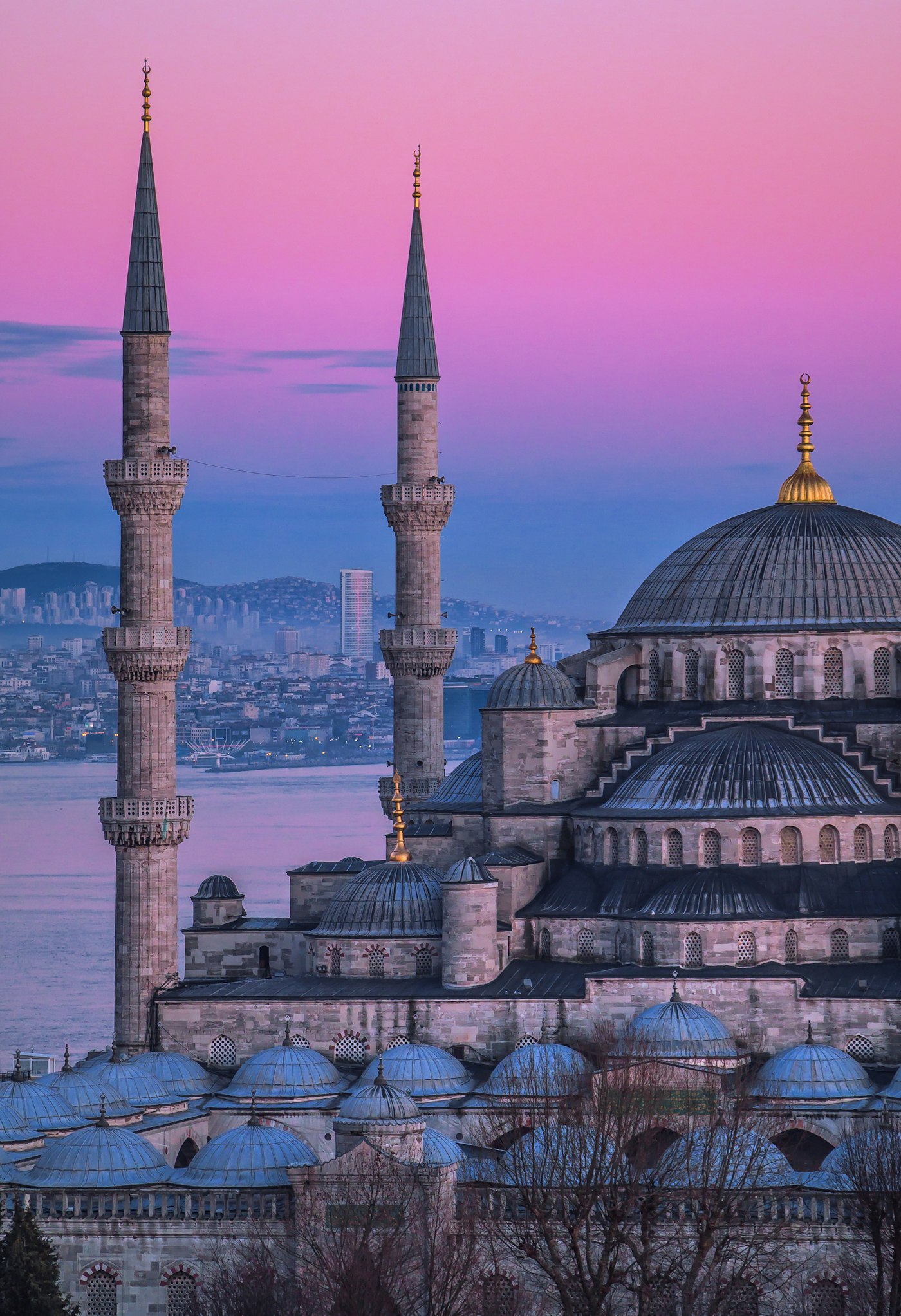 Turquoise Coast
A gulet is a traditional wooden Turkish sailing vessel, hand-built along the southwestern coast and today refitted for private charter with a full crew and onboard chef. Your seven-night Blue Voyage (Mavi Yolculuk) threads through the sheltered bays of Göcek, the whitewashed streets of Kalkan, the sunken ruins of Kekova and the harbour town of Kaş — a slower, more intimate way to experience the Turquoise Coast than any land-based itinerary could offer.
KekovaA powerful second-century earthquake dropped part of the ancient Lycian city of Simena beneath the sea off Kekova Island — staircases, house foundations and harbour walls remain visible through the clear water today. Swimming directly over the protected ruins is not permitted, but cruising slowly above them by boat, then climbing to the Byzantine fortress of nearby Kaleköy for panoramic views, delivers one of the most striking historical seascapes anywhere in the Mediterranean.
AntalyaBuilt in AD 130 to commemorate Emperor Hadrian's visit to the city, this triple-arched ceremonial gateway remains remarkably intact, its fluted columns and coffered arches leading directly into Kaleiçi — Antalya's old town of Ottoman wooden houses, hidden courtyards and a harbour ringed by ancient walls. Few cities in Turkey let you walk this seamlessly from imperial Rome into the Ottoman era in the span of a single city block.
AspendosBuilt around AD 155 under the reign of Marcus Aurelius, the theatre at Aspendos is widely regarded as the best-preserved Roman theatre anywhere in the Mediterranean world. Its acoustic design is so precise that unamplified voices — and, according to local tradition, even a dropped coin — can be heard clearly from the very top row of its 20,000 seats. The theatre remains in active use today, hosting an annual international opera and ballet festival.
CappadociaCappadocia's stable pre-dawn winds and dramatic volcanic terrain have made it one of the world's premier ballooning destinations, with upward of a hundred balloons regularly filling the sky over Göreme each clear morning. Drifting silently above fairy chimneys and pastel-toned valleys as the sun rises, surrounded by dozens of other balloons suspended in the same golden light, consistently ranks among travellers' single most memorable experiences anywhere in Turkey.
ŞanlıurfaDating back roughly 11,500 years, Göbeklitepe's massive carved T-shaped pillars predate Stonehenge by about six thousand years and Egypt's pyramids by about seven thousand, making it the oldest known monumental architecture built by human hands. Most strikingly, it was raised by hunter-gatherers before the invention of agriculture or pottery, upending long-held theories that organised religion only emerged after settled farming began — a genuine rewriting of the human story.
Mount NemrutKing Antiochus I of Commagene built this mountaintop tomb-sanctuary in the first century BC, flanking a 50-metre burial tumulus with colossal seated statues of himself alongside Greek and Persian gods — a deliberate visual statement of his kingdom's position between the Roman and Parthian worlds. Earthquakes long ago toppled the nine-metre heads from their bodies, and they now sit scattered across the terraces at eye level, staring toward the Euphrates valley below.
Tailored guidance from The History Travel's planning team and trip-pattern data, to help you get the very most from all 40 days.
Spring (April–June) and autumn (September–October) give the most reliable conditions across Turkey's varied microclimates — cool enough for the Lycian Way and Termessos, warm enough for comfortable swimming during the Gulet cruise.
Pack sturdy, already broken-in trail shoes for the Lycian Way, Termessos, Saklıkent and Ihlara Valley sections — plus lightweight sandals for the Gulet, where deck shoes are rarely welcome.
For Cappadocia's fairy chimneys, golden hour is best shot from Uçhisar Castle or from a balloon at sunrise. At Mount Nemrut, evening light favours the western terrace; sunrise favours the eastern terrace heads.
Layer for a genuine range of climates — coastal humidity, mountain evenings above 1,000m, and Cappadocia's chillier plateau nights. A soft-sided bag packs more easily into the Gulet's cabin storage than a hard-shell case.
The trip is rated moderate overall; a baseline of comfortable 2–3 hour walks is enough for most days. Guests wanting an easier pace can opt out of the higher-effort treks without affecting the rest of the group.
Wi-Fi is available in hotels and most coastal anchorages, but can be intermittent in remote bays during the Gulet week and at Mount Nemrut. A local eSIM is a reliable backup for the full 40 days.
A fully escorted, multi-region 40-day tour with private VIP transport, domestic flights, heritage and cave-hotel stays, and a luxury Gulet charter typically runs between $12,500 and $15,200 USD per person (double occupancy) in the current Turkish luxury travel market — this itinerary is priced within that range. Here's exactly what that includes.
Accommodation is hand-picked at every stage — 5-star and boutique hotels in the cities, a genuine cave suite in Cappadocia, heritage properties near Mount Nemrut and in Şanlıurfa, and seven nights aboard a private, crewed wooden Gulet along the coast.
Historic 5-star hotels in Sultanahmet with views over the Bosphorus or Old City, a boutique seafront hotel in Çanakkale near the Gallipoli battlefields, and luxury coastal properties in Izmir and Kuşadası.
A spa hotel in Pamukkale with direct access to thermal pools, a lakeside resort in Eğirdir beneath the Taurus Mountains, and a boutique Mediterranean hotel in Fethiye overlooking the marina.
Seven nights aboard a handcrafted wooden Gulet with individually appointed private cabins, en-suite bathrooms, shaded deck lounges and a dedicated onboard chef — anchoring nightly in secluded Turquoise Coast bays.
A boutique cliffside hotel in Kaş above the harbour, and a luxury boutique property inside the ancient walls of Kaleiçi, Antalya's atmospheric old town.
A private luxury cave suite hotel in Göreme or Uçhisar carved directly into volcanic rock, a heritage hotel at the base of Mount Nemrut for an early summit ascent, a heritage property in Şanlıurfa, and a final night back in Istanbul.
Operating under full TURSAB certification, with guides holding decades of deep-rooted heritage knowledge across every region on this itinerary.
Flexible scheduling designed around your physical preferences, photography interests and historical curiosity — especially on private departures.
Curated partnerships with premier Anatolian cave hotels, luxury Gulet crews and veteran historian guides built over years, not booked cold.
A dedicated reservations team is reachable throughout your 40 days for anything from a schedule tweak to an unexpected question.
No hidden site-entry surprises — museum passes, fast-track tickets and nearly all meals are priced into your quote from day one.
Free cancellation up to 48 hours before departure, with date changes accommodated subject to availability.
Have questions about the 40-day itinerary, or not ready to reserve yet? Send us a message and we'll reply within a few hours.
Choose private or small-group, select your tickets, and provide your details. We'll confirm availability within a few hours.
Free cancellation up to 48 hours before the tour start date. Cancellations within 48 hours are non-refundable. Date changes are accommodated subject to hotel and Gulet availability.
Six weeks that genuinely changed how I understand this part of the world. The historian guide's depth of knowledge made even sites I thought I knew — Ephesus, Topkapı — feel completely new. The Gulet week was the highlight of the entire trip.
Verified TravellerWe debated whether 40 days was too long. It absolutely was not. The pacing was perfect — never rushed, never a wasted day. Mount Nemrut at sunrise and the balloon flight over Cappadocia are burned into our memory forever.
Verified TravellerBooked this as a private family tour for four generations travelling together. The flexibility to slow down on the harder hiking days for my parents, while my teenagers did the full Lycian Way sections, was exactly what we needed.
Verified TravellerAn extraordinary itinerary covering more of Turkey than I thought possible on one trip. My only note is that the Şanlıurfa leg felt a touch rushed compared to the rest — otherwise close to flawless organisation throughout.
Verified Traveller Popular
A shorter but comprehensive route through Istanbul, the Aegean coast, Pamukkale, Fethiye, Antalya and Cappadocia.
Fairy chimneys, underground cities and a sunrise balloon flight — perfect as a standalone trip or an add-on.

Just the Turquoise Coast sailing chapter of the Grand Odyssey, available as a stand-alone charter.
Share Your Experience